
They’ve always been around; you just didn’t realize you were watching them:
On this day, the day that has become Roman Numeral Day, we tend to think of the evolution being Doug to Steve to Donovan to Colin to Russell to Cam to now Patrick…

But Fritz Pollard was around for the birth of the NFL, as both the starting Halfback and Head Coach of the Akron Pros of the newly founded American Professional Football Association—which today is now known as the NFL. He was a halfback, which meant he was the primary ball handler back in that ancient time—QBs were primarily blockers in the fledging days of football.
Fritz lost his job in the NFL when the Depression hit and the coaches and team owners felt it was unfair for some players to be unemployed because of the color of their skin…hmmm…imagine that…
When the rule they say wasn’t a rule ended, Black players were allowed back in the league, as long as they could run, catch and tackle. Those who could throw the football? Wait here until we decide which position you’re best suited for.
Willie Thrower (stop laughing, that was his name) played in a game for the Chicago Bears, in 1953 in relief of starting QB George Blanda. Willie went 3-for-8, was pulled and released shortly after that.
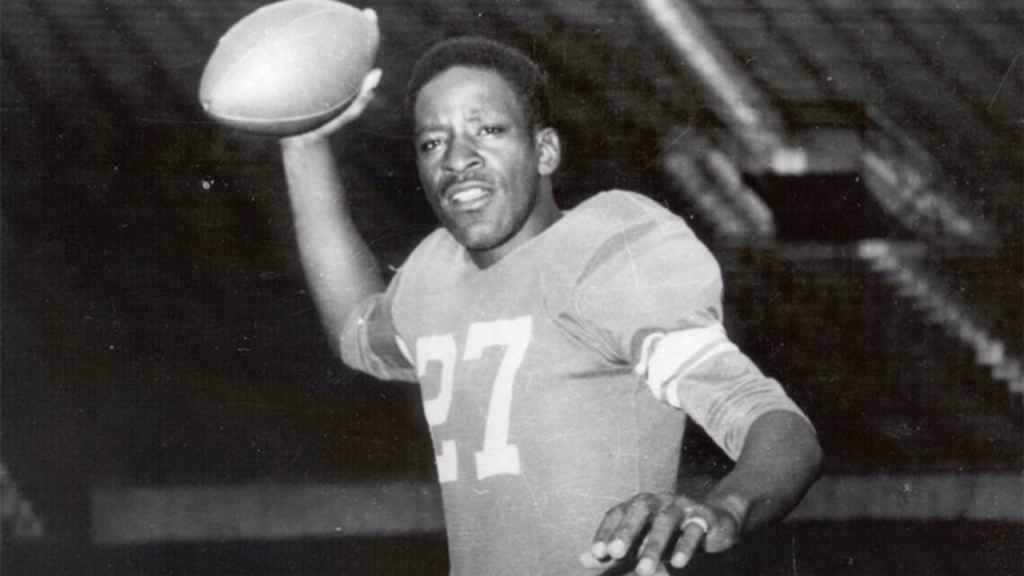
A rebel league was formed 7 years after Willie Thrower threw his passes. While the American Football League championed civil rights—including moving its All-Star game because of the racist hotel policies of the city where they were schedule to play, they emulated the older league in one way. The American Football League welcomed Black players, as long as they could run, catch and tackle.
It wasn’t that colleges weren’t developing Black QBs during the NFL/AFL war—Sandy Stephans took the University of Minnesota to back to back Rose Bowls in 1960 and 1961. Jimmy Raye was the QB for Michigan State against Notre Dame in the 1966 “Game of the Century.”
Stephans finished his career playing fullback in the AFL. Raye was drafted by Philadelphia and converted into a defensive back.
And of course there were plenty of QBs learning the game at places like Grambling State, Southern and Tennessee State, the campuses of America’s Historic Black Colleges and Universities (HBCUs). Eldridge Dickey was an All-American QB at Tennessee State and was drafted in the first round by the Oakland Raiders—but soon after the Raiders thought he would be better catching the ball than throwing it.
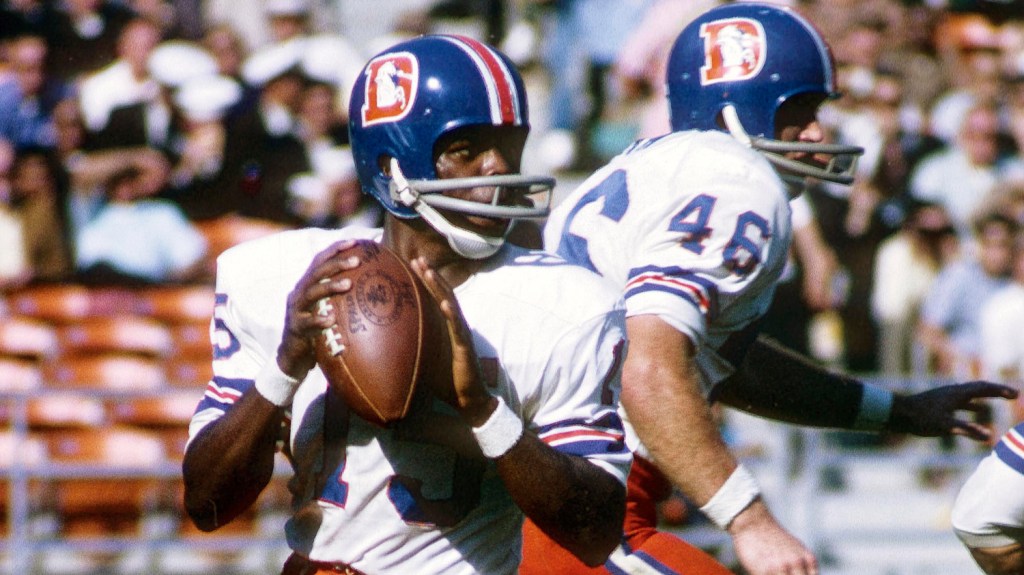
In an ironic twist, the year Dickey was drafted, there was a Black starter in Denver. Marlin Briscoe started for the Broncos—but only after the starter broke his collarbone and the backup couldn’t do the job.
Briscoe played 5 games and passed for 14 TDs—a Bronco rookie record he still holds. His reward for playing so well?? He was released by Denver for wanting to play QB. When he was signed by Buffalo, he was converted to wide receiver. He would win two Super Bowls with the Miami Dolphins…but not in the position he wanted to play.
Irony: it’s likely that Briscoe was converted to wide receiver because Buffalo already had a Black QB—Grambling’s James Harris—the first Black QB I remember seeing in the NFL.
Coming into ‘70s, Black QBs didn’t need a burning cross…oops, I mean a burning bush, to realize if they wanted to play the position they had been playing since Pop Warner, they might want to look someplace else.
Condredge Holloway was the first Black QB to start in the Southeastern Conference, playing for the University of Tennessee.
Warren Moon was at the wheel of the University of Washington team that beat the vaunted University of Michigan in the 1978 Rose Bowl.
When the NFL draft rolled around, both Condredge and Warren told the NFL not to bother. They took the Underground Railroad north to Canada and the Canadian Football League.
Condredge won a title up north.
Warren won five titles in a row in Canada (take that Tom Terrific) on his way to becoming the most coveted free agent in the history of the NFL, but only after showing he was a better QB than the likes of Vince Ferragamo, David Woodley, and Tony Eason—all who started in the Roman Numeral Game (and lost…) while Warren was battling snowstorms in Edmonton.

Condredge and Warren are both in the CFL Hall of Fame—and Warren is also a member of the NFL Hall of Fame, the only player to have a bust in Canton, Ohio and Hamilton, Ontario.
Tony Dungy came out of the University of Minnesota as an All Big-10 QB at the same time as Moon. The only Black man to win the Super Bowl as a coach was converted into a defensive back by Pittsburgh.
Sensing a pattern here?
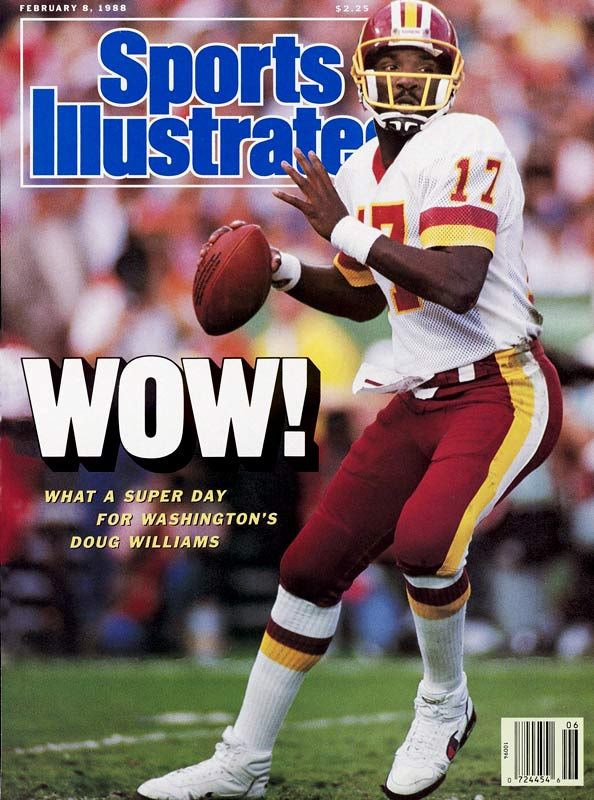
It took Doug Williams, another Grambling St. grad, ripping the heart out of the Denver Broncos to get people to start thinking maybe, just maybe, a Black QB might be capable of being a Super Bowl winning QB.
When Doug won his ring, Randall Cunningham was expected to follow him into a Roman Numeral Game. He never made it, but Randall help usher in a generation of “athletic QBs” because suddenly, drafting “athletic QBs” became a cool thing.
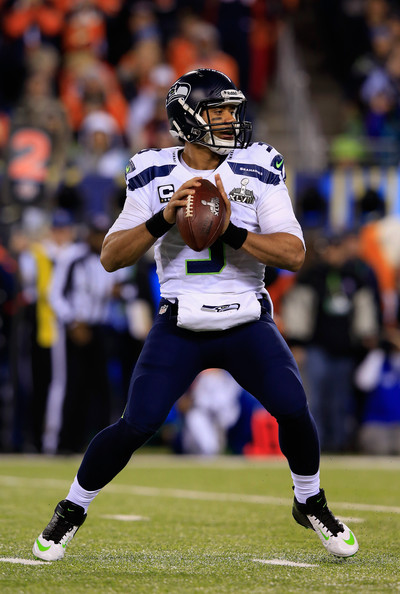
Kordell and Rodney and Akili and Aaron and Jeff and Dante and Steve and Michael and David and JaMarcus and Colin and Robert—and of course, Russell.
They’ve been followed by Dak and Deshaun and Lamar and the starting QB for Kansas City, Patrick, starting for the team that made Sandy Stephans play fullback to stay in the league.
Understand that when he steps onto the field, Mahomes will carry a legacy that stretches back to the start of the NFL, to Fritz and Willie and Marlin and those nameless players who were given the opportunity to carry, catch and tackle, but never to throw the football.
Also understand that between wings and ribs and brats and beverages and commercials, we’re going to hear A LOT about the “great athleticism” displayed by Pat Mahomes. Why? Because Pat and Cam and Russell and Colin and Donovan and Steve and Doug are still not seen as great quarterbacks….
But as remarkable athletes.
I still have SB XLVIII on my DVR, and while watching it recently, you know the same words they’re going to use to describe Mahomes in SB LIV were used when describing Russell Wilson. For me, those terms have almost become “trigger words.”
I look forward to the day the talking heads start talking about Pat and Dak and Deshaun and Lamar—and Russ—and their great awareness in the pocket and their incredible presence on the field, you know, the same way they talk about Drew Brees, Gardner Minshew, Flat Ball Tommy and Jimmy Garappolo.
Here’s hoping this game, win or lose, is the start.
Until Next Time.

